
How China Metal CNC Machining Supports Complex Part Production


China metal CNC machining is widely used for producing custom components that require controlled dimensions, repeatable geometry, and detailed functional features. For buyers sourcing precision metal parts, the value of CNC machining is not simply that material can be removed quickly. The real advantage comes from coordinating part design, tool access, fixturing, machining sequence, and inspection around the requirements of the finished component.
This is especially important for prototypes and custom parts with several related surfaces, bores, pockets, threads, or mounting features.
How China Metal CNC Machining Controls Complex Features
CNC machining follows programmed tool paths to remove material from metal stock. The process can create flat surfaces, holes, slots, pockets, contours, threads, and other precision features while maintaining defined relationships between them.
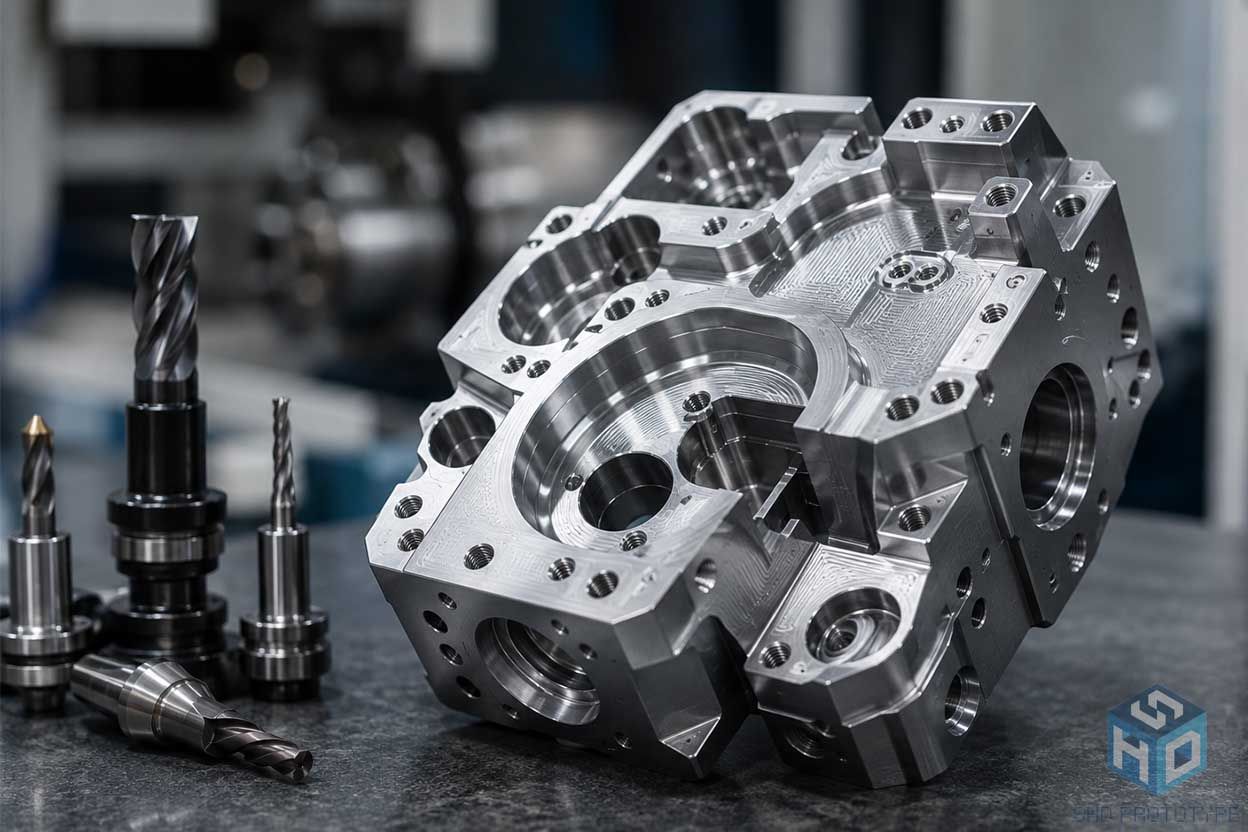
However, machining accuracy depends on more than the programmed coordinates. Material condition, cutting forces, heat generation, tool wear, fixture stability, and the number of setups can all affect the final result. A drawing should therefore identify critical datums, mating surfaces, and functional dimensions before machining begins. Good precision machining technology focuses tighter control on the features that influence assembly or performance instead of applying unnecessarily strict tolerances across the entire part.
Multi-Axis Machining Reduces Repositioning
Complex components often contain features on several faces or at different angles. Conventional machining may require the workpiece to be removed, rotated, realigned, and clamped again for each side.
CNC multi-axis machining can reduce these repeated setups by allowing the cutting tool or workpiece to approach the part from additional directions. This is useful for components with:
- Angled holes and surfaces
- Complex curved profiles
- Features located on several faces
- Deep cavities requiring improved tool access
- Closely related dimensions across different orientations
Reducing manual repositioning can also help maintain more consistent relationships between important features.
Tool Access Still Affects Part Design
Multi-axis capability does not make every geometry equally easy to machine. Deep narrow pockets may require long tools, which can increase vibration and reduce cutting stability. Very small internal corner radii may require smaller cutters and longer machining times. Thin walls can also deform when exposed to cutting or clamping forces.
Early design review can identify these issues before production begins. In some cases, slightly changing a corner radius, wall thickness, or tool-access direction can simplify machining without changing the function of the part.
Machining Sequence Influences Accuracy
For components that require substantial material removal, the order of operations matters. Rough machining may first remove most of the excess material while leaving an allowance around critical surfaces. Final dimensions can then be produced during finishing operations. This approach can help control dimensional changes caused by material stress, cutting heat, or reduced part stiffness.
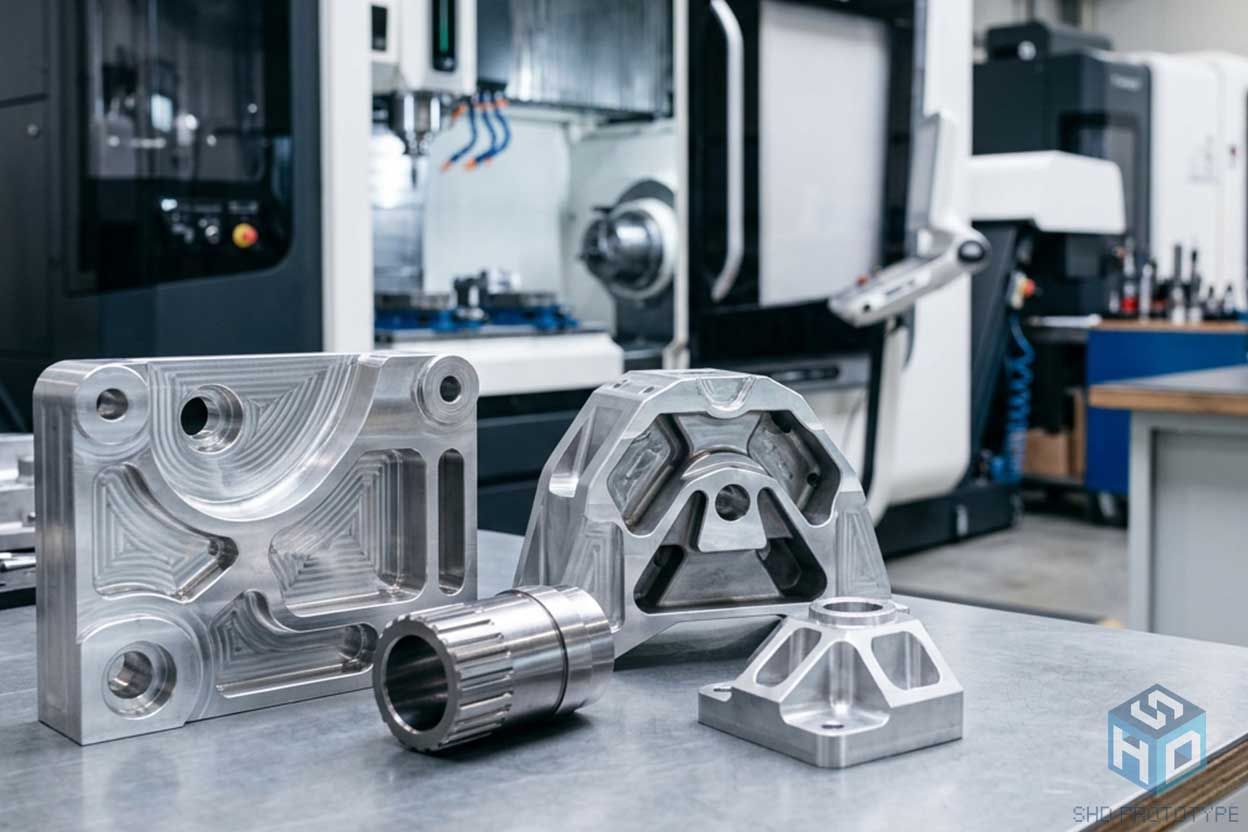
Fixturing must also support the component without introducing distortion. A thin part held too tightly may appear accurate while clamped but change shape after it is released.
Inspection Should Follow Functional Priorities
Not every dimension requires the same inspection method. Critical bores, mounting positions, sealing surfaces, threaded features, and assembly datums may require closer verification than non-functional areas. Inspection planning should therefore follow the engineering drawing and the actual use of the part.
Clear tolerance requirements also make communication between buyers and manufacturers more efficient.
Conclusion
China metal CNC machining provides a flexible manufacturing route for prototypes and custom metal components, especially when parts contain multiple precision features and complex geometry.
Reliable results depend on the combination of material behavior, tooling, fixturing, machining sequence, multi-axis access, and inspection. Reviewing these factors early can improve manufacturability and reduce unnecessary machining complexity.
Precision Machining Support from SHD PROTOTYPE
SHD PROTOTYPE supports custom CNC machining projects based on customer drawings, three-dimensional models, material requirements, critical dimensions, and functional surfaces. For complex components, early review of machining access, datum relationships, fixture strategy, and finishing requirements can help establish a more practical manufacturing route from prototype development to repeatable part production.