
CNC Machine Table Types and Their Role in Precision Machining


A CNC machine table is the platform used to support and secure a workpiece during machining. In CNC milling machines and machining centers, the table provides a stable reference for fixtures, vises, and clamping devices. Its design influences workholding flexibility, positioning accuracy, and machining accessibility.
However, the term CNC worktable is sometimes also used for tool storage benches, mobile tool carts, and workshop stations. These auxiliary products serve different purposes and should not be confused with the machine's actual workholding table.
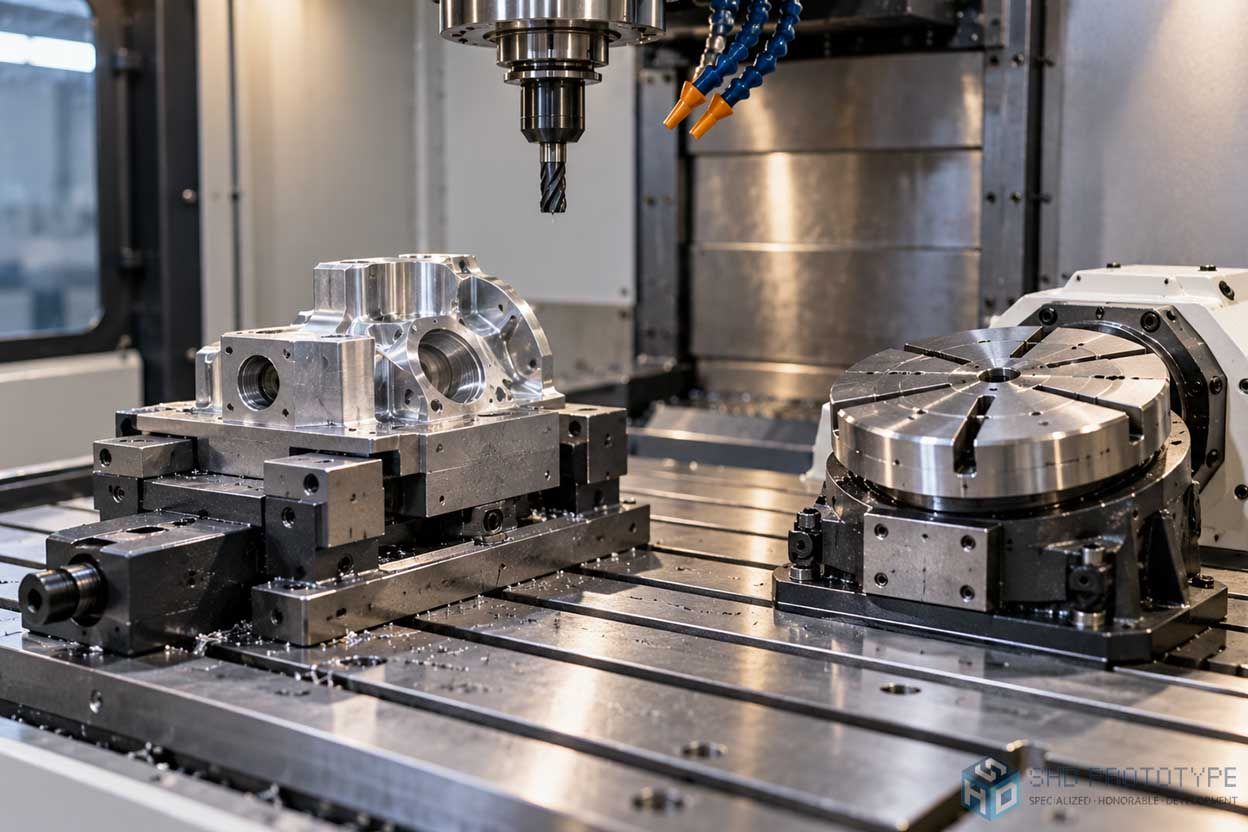
How a CNC Machine Table Supports Accuracy
A machine table must provide sufficient rigidity and a reliable mounting surface for the workpiece and its fixtures. During machining, cutting forces can cause vibration or unwanted movement if the workpiece is not properly secured. The table, fixture, and clamping arrangement therefore work together to maintain stable positioning.
1. T-Slot Tables for Flexible Workholding
A T-slot machine table uses parallel T-shaped grooves to accommodate T-nuts, clamping bolts, and fixture components. This arrangement allows operators to secure workpieces of different sizes and shapes without requiring a dedicated fixture for every job. T-slot tables are commonly found on CNC milling machines and machining centers.
Some machines instead use tables with threaded mounting holes or dedicated fixture interfaces. The appropriate design depends on the machine configuration and workholding requirements.
2. Rotary Tables for Multi-Axis Machining
A CNC rotary table adds controlled rotational positioning to a machining setup. When integrated with a compatible CNC machine, a rotary table can provide an additional rotary axis for indexing or coordinated machining. This is useful for components requiring angled holes, multiple machined faces, or features distributed around a cylindrical surface.
More advanced configurations may combine two rotary axes to support five-axis machining, but a single rotary table does not automatically make a machine five-axis capable.
Workshop Benches and Tool Carts Serve Different Purposes
Outside the machine enclosure, CNC workshops also use heavy-duty workbenches, tool carts, and storage cabinets. These stations may hold toolholders, cutting tools, measuring instruments, drawings, or computers. Dedicated toolholder carts can accommodate common interfaces such as BT30 or BT40 while helping protect precision contact surfaces from accidental damage.
Unlike a machine table, a workshop bench is not part of the machine's positioning and cutting system.
Conclusion
A CNC machine table is an essential part of accurate and stable workholding. T-slot tables provide flexible fixture mounting, while rotary tables expand machining access and positioning possibilities. Choosing the right setup depends on workpiece geometry, cutting forces, machine configuration, and the required machining operations.
Precision CNC Machining with SHD PROTOTYPE
SHD PROTOTYPE supports custom CNC machining projects based on customer drawings, 3D models, material requirements, and critical dimensions. For complex components, appropriate workholding, fixture planning, and machining access help establish a practical manufacturing process from prototype development to repeatable part production.
Frequently Asked Questions
Q01 | Does a larger CNC table always support larger parts?
Not necessarily. Machine travel, spindle clearance, enclosure dimensions, and permitted table load also limit the size of a workpiece that can be machined.
Q02 | Can a CNC rotary table improve machining efficiency?
It can reduce manual repositioning for suitable components. However, the benefit depends on part geometry, rotary-axis accuracy, controller compatibility, and setup requirements.
Q03 | Why should the machine table be cleaned before installing fixtures?
Chips, debris, or contamination trapped beneath a fixture can affect seating and alignment. Cleaning the contact surfaces helps maintain reliable workpiece positioning.