
What to Check Before Ordering Custom 304 Stainless Steel Gears


Ordering custom 304 stainless steel gears involves more than sending a drawing with the required tooth count and diameter. For mechanical engineers and purchasing teams, small differences in gear geometry, surface finish, and inspection requirements can affect both manufacturing costs and assembly performance.
304 stainless steel offers corrosion resistance for suitable industrial environments, but its tendency to work-harden during machining requires appropriate cutting conditions. Before requesting a quotation, buyers should clarify the gear's functional requirements and the evidence needed for acceptance.
What Matters When Specifying Custom 304 Stainless Steel Gears?
Start with a drawing that defines the critical features. A useful gear drawing should identify the module, number of teeth, pressure angle, face width, bore dimensions, and relevant mounting features. For helical gears, the helix angle and direction must also be defined.
Just as importantly, the drawing for custom 304 stainless steel gears should establish the inspection datums and any required gear profile and lead tolerance. These requirements help manufacturers understand how accurately the tooth geometry must be produced. If a particular gear flank requires a controlled surface roughness, its Ra value and inspection location should also be specified. Without these details, two suppliers may quote different manufacturing and inspection scopes for what appears to be the same component.
Consider Machining and Finishing Together
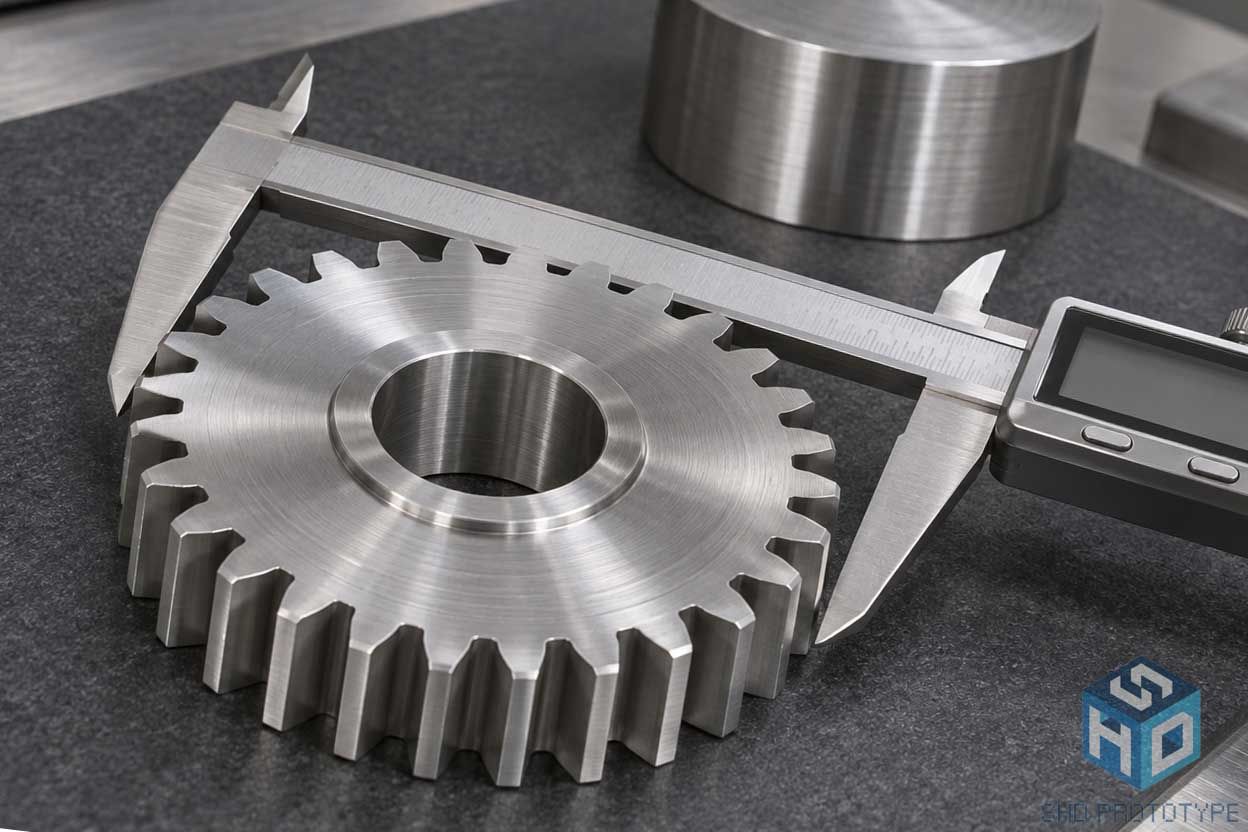
304 stainless steel gear hobbing is one possible method for producing external gear teeth. However, the complete manufacturing route may also involve turning, boring, keyway machining, deburring, and additional finishing operations. During 304 stainless steel gear machining, tool wear, cutting conditions, and workpiece rigidity can affect surface quality and dimensional consistency.
Buyers should confirm whether the quoted price covers only tooth cutting or also includes precision bore finishing, critical surface preparation, and any necessary secondary operations. A gear that meets its basic dimensions may still require further processing to satisfy demanding assembly requirements.
First-Piece Inspection Should Match the Drawing
Before repeat production, the initial gear should be checked against the approved technical requirements. A stainless steel gear inspection report may include material identification, key dimensions, bore runout, tooth profile deviations, lead deviations, and specified surface roughness results.
The required scope depends on the gear's application and agreed quality plan. For projects requiring detailed tooth inspection, actual measurement curves can provide stronger evidence than a simple statement that the gear has passed inspection.
It is also important to clarify the inspection stage. If deburring, polishing, or another finishing operation follows gear cutting, the buyer should confirm which requirements apply to the final delivered condition.
Conclusion
Successful procurement of custom 304 stainless steel gears begins with clear drawings and realistic manufacturing expectations. By identifying critical tooth geometry, machining requirements, finishing operations, and first-piece acceptance criteria before quotation, buyers can reduce misunderstandings and compare suppliers more effectively.
SHD PROTOTYPE supports custom precision component manufacturing discussions based on customer drawings, material specifications, dimensional requirements, and intended applications. For stainless steel gear projects, buyers can share their technical drawings and inspection expectations with SHD to discuss manufacturing feasibility, finishing requirements, and quotation scope.