
Five-Axis CNC Machined Parts Cover a Wider Range of Complex Designs


Five-axis CNC machined parts are becoming increasingly important for product teams that need complex geometry, accurate feature alignment, and reliable prototype or low-volume production. At SHD PROTOTYPE, we often use five-axis machining when conventional milling or turning would require too many setups or create difficult tool access problems.
This process is especially valuable when a component has angled surfaces, curved profiles, deep cavities, undercuts, or features distributed across several sides of the part.
Why Five-Axis CNC Machined Parts Expand Manufacturing Possibilities
Traditional three-axis CNC machining is suitable for many flat, prismatic, and straightforward components. However, when the workpiece requires machining from multiple directions, repeated repositioning may increase time and reduce accuracy.
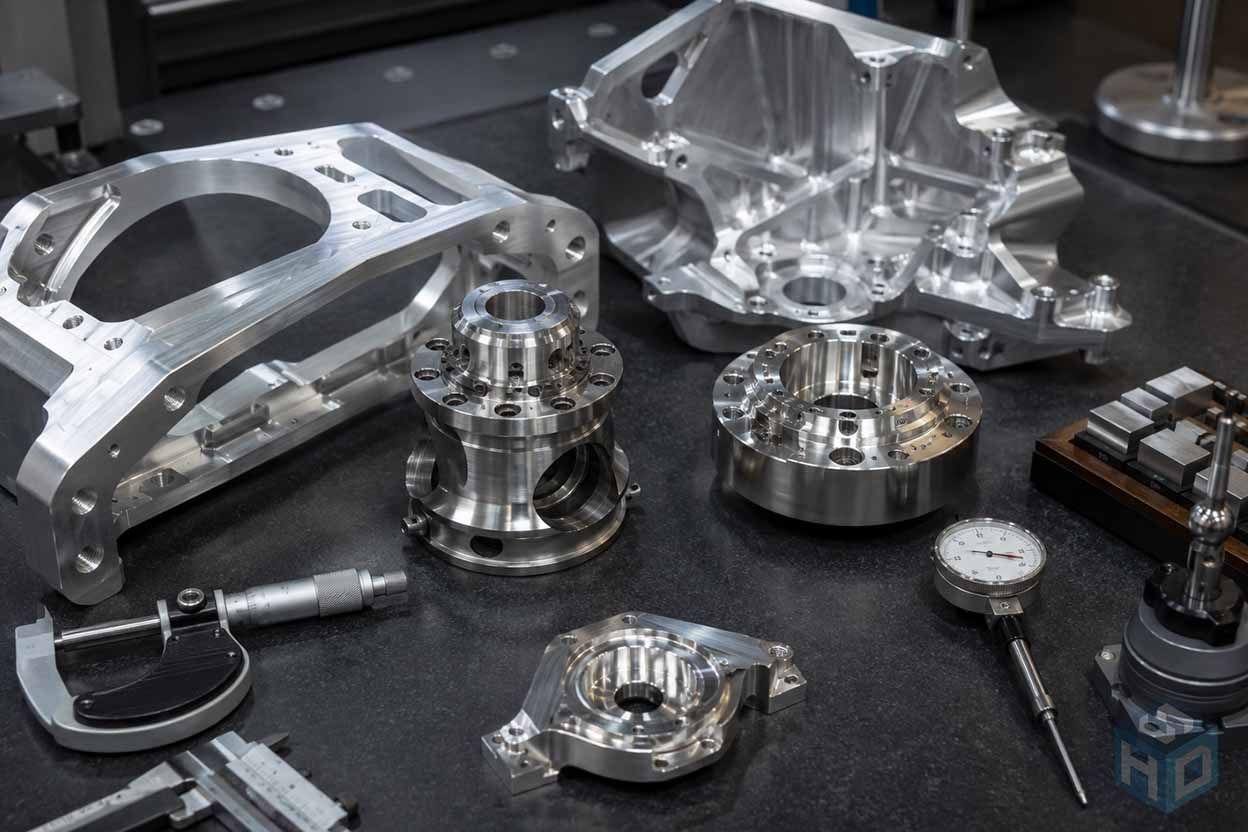
Five-axis machining allows the cutting tool or workpiece to move through additional rotational axes. This makes it easier to approach complex areas without removing the part from the fixture many times.
For complex CNC components, fewer setups can help maintain better relationships between holes, bores, slots, curved faces, and mounting features. This is one reason five-axis CNC machined parts are widely used in prototype development and demanding OEM applications.
Typical Parts Suitable for Five-Axis Machining
At SHD PROTOTYPE, multi-axis machining services are often used for parts with difficult geometry rather than simple rectangular blocks.
Common examples include aerospace-style brackets, robotic joints, medical device housings, optical mounts, turbine-like components, impellers, precision fixtures, automotive prototype parts, and lightweight structural components.
Five-axis CNC machined parts are also suitable for products that require smooth contour surfaces. These may include curved aluminum housings, ergonomic metal handles, complex mold inserts, and parts with sculpted external surfaces.
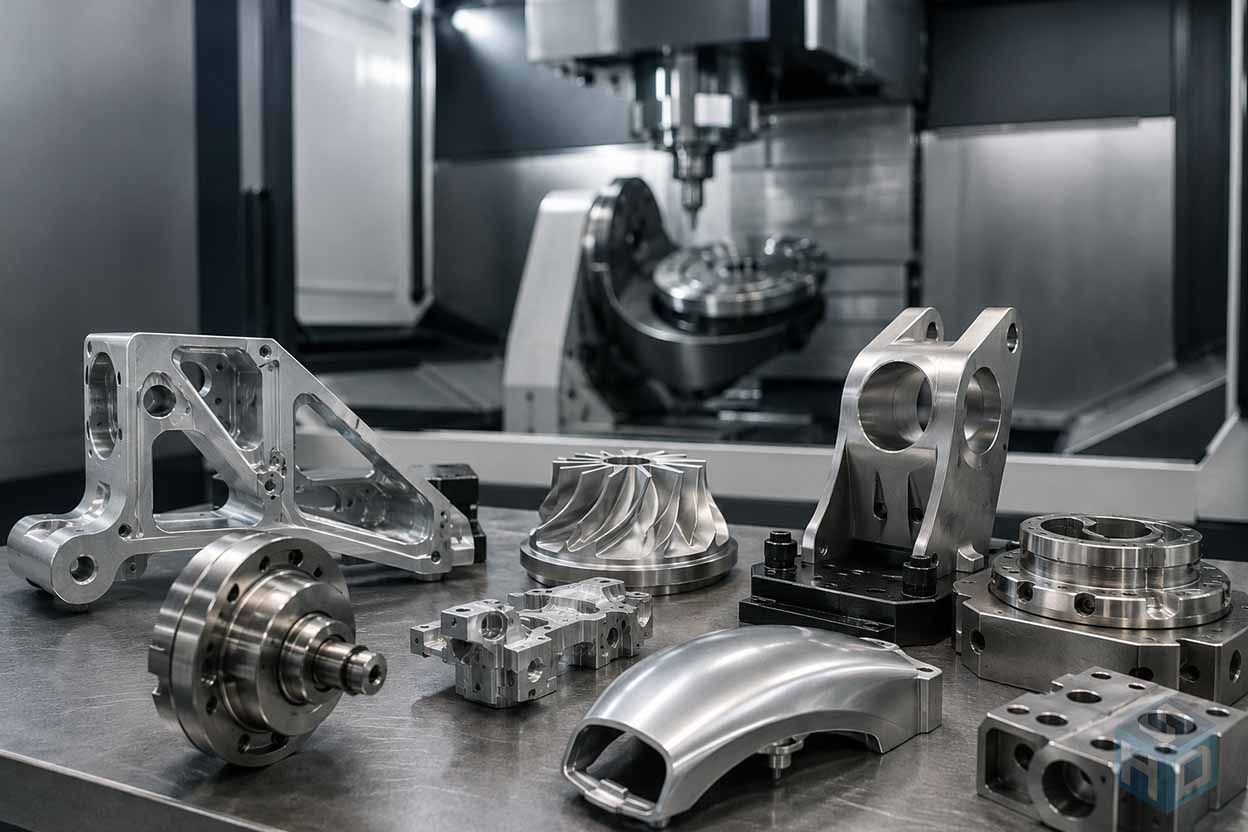
In many cases, the value of five-axis machining is not only the ability to cut complex shapes. It also helps reduce the need for multiple fixtures, manual repositioning, and secondary correction.
Material Options for Complex CNC Components
Different materials can be processed depending on product requirements. Aluminum is widely used for lightweight prototypes, housings, brackets, and structural parts. Stainless steel is suitable for components requiring strength, corrosion resistance, or wear resistance. Brass may be used for fittings, connectors, or mechanical details. Titanium and engineering plastics can also be considered for selected applications.
During project review, SHD PROTOTYPE evaluates not only material selection but also wall thickness, clamping position, tool reach, surface finish, and tolerance requirements. These factors determine whether multi-axis machining services are the most practical production route.
When Five-Axis Machining Is Not Necessary
Not every part needs five-axis machining. Simple plates, basic blocks, standard shafts, and components with only one or two machining faces may be produced more efficiently using three-axis milling or CNC turning. Choosing the right process is more important than using the most advanced machine for every job.
For this reason, we review each drawing and 3D model before recommending five-axis CNC machined parts. If a simpler process can meet the functional requirements, it may reduce cost and shorten lead time.
Practical Advice for Product Development
When designing complex CNC components, engineers should identify which features are truly critical. Tight tolerances should be applied to functional surfaces, assembly references, sealing areas, or movement-related features rather than every surface.
Clear 3D files, drawings, material requirements, surface finish expectations, and application details help us select the right machining strategy early.
This preparation allows multi-axis machining services to deliver better results with fewer production risks.
Conclusion
Five-axis CNC machined parts cover a wide range of complex designs, from curved prototypes and robotic components to aerospace-style brackets, precision fixtures, and lightweight structural parts. Their real value comes from improved tool access, fewer setups, and better control of feature relationships.
Supporting Complex CNC Part Development
At SHD PROTOTYPE, we provide five-axis CNC machined parts for prototype validation, engineering testing, and low-volume OEM production. Our team supports complex CNC components through material review, toolpath planning, fixture strategy, inspection, and practical multi-axis machining services.